


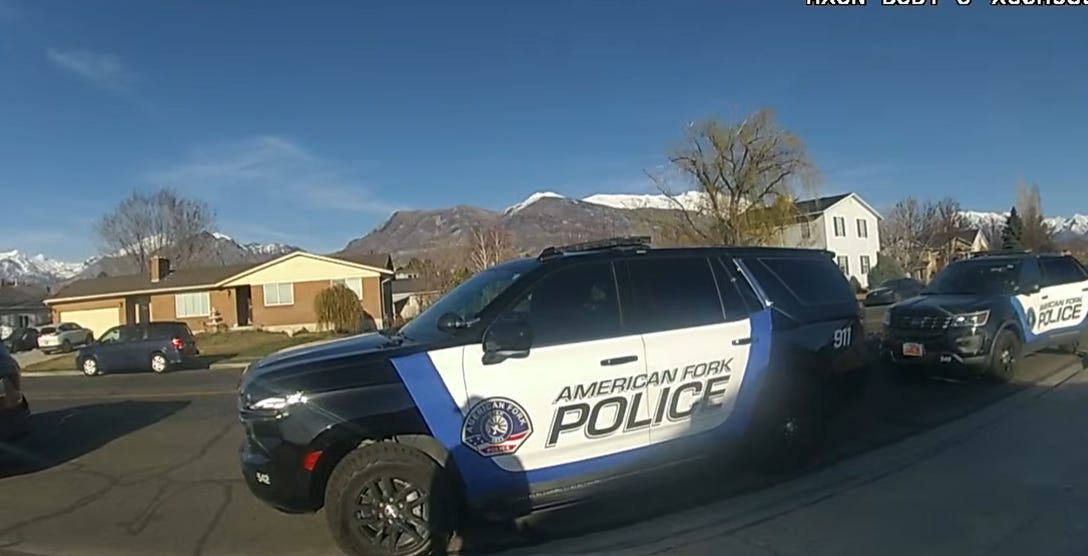
The American Fork Police Department recently drew public attention because of the Bricks and Minifigs controversy involving Ben Schneider, also known as Reckless Ben on YouTube. In unredacted bodycam footage, multiple officers engaged in numerous concerning investigative practices and behavior that have led to public outrage and increased scrutiny of the department.
Once the controversy involving Reckless Ben, Bricks and Minifigs, and the American Fork Police Department became public, people began scrutinizing past police encounters involving American Fork officers. I have also been watching bodycam footage, reading news articles, and reviewing legal documents related to several cases involving the department.
After reviewing bodycam footage, news reports, lawsuits, and public records, I believe these cases reveal a troubling pattern of unprofessional officer conduct, disregard for Fourth Amendment rights, and disregard for due process.
Including the Bricks and Minifigs controversy, I have counted at least eight controversial encounters involving the American Fork Police Department.
Below, I have included a section for each case, organized by the name of the citizen involved in the police interaction. Each section includes sources and a description of what happened.
This article is longer than usual because it summarizes multiple encounters involving the American Fork Police Department. Readers do not need to read every section in order. Each case stands on its own, but together they raise a broader concern about officer judgment, constitutional rights, due process, and accountability.
Cases that Raise Concerns About American Fork Police
Ben Schneider
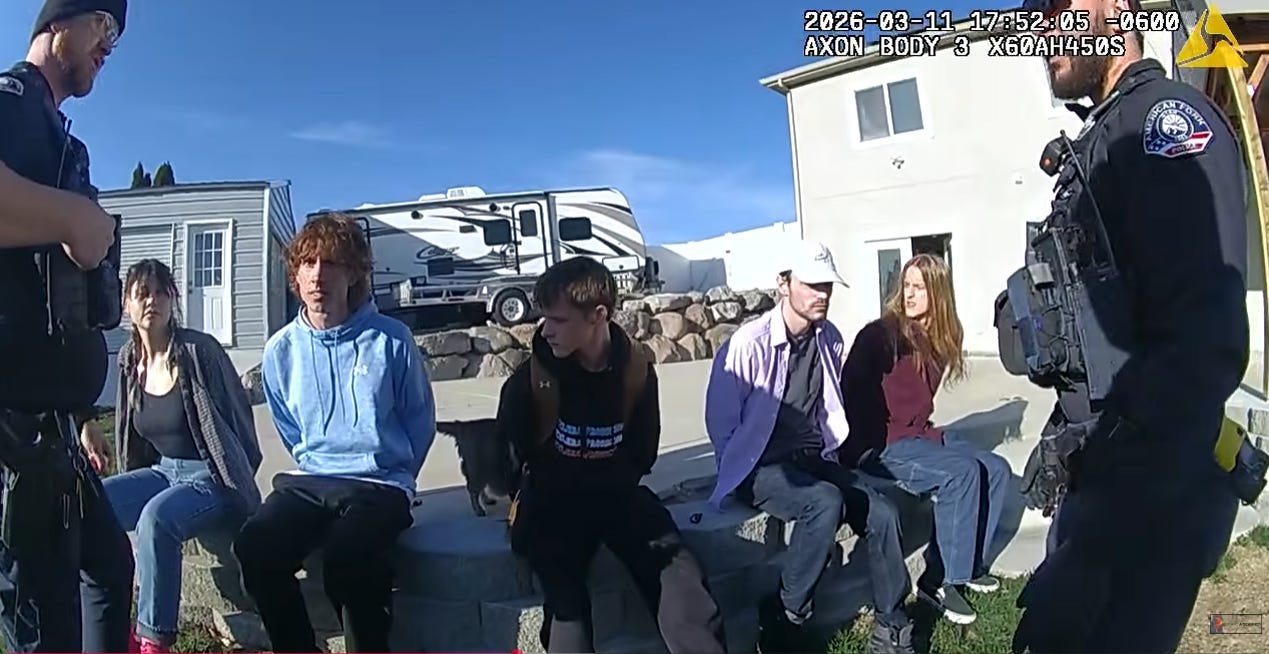
This is probably the most complicated case in the list, so I am not going to go into great detail about it, especially because this case has already been covered by many YouTubers and news agencies. I encourage everyone to look into the case for themselves.
Bricks & Minifigs and the Star Wars LEGO Collection Dispute
Basically, this case started because Brian Mansell’s father had a large LEGO collection with rare Star Wars LEGO sets. Brian’s father was dying from cancer and gave Brian ownership of the sets. Brian then made a consignment agreement with a Bricks & Minifigs franchise in Salem, Oregon, so the store could help sell the sets and give him a portion of the profits.
But then the franchise changed hands. Bricks & Minifigs corporate says it terminated the previous owner’s franchise agreement and transferred the location to new franchise owners. By that point, Brian had allegedly not been paid for many of the sets that had already been sold, and there were still questions about where many of the unsold sets were and how they would be returned. This resulted in a civil dispute over the ownership, sale, and return of the LEGO sets.
Brian then asked the YouTuber Reckless Ben to help him pressure the company and recover the collection.
Ben Schneider went to Utah to pressure Bricks & Minifigs CEO Ammon McNeff and Salem/Keizer franchise owner Joshua Johnson to resolve the dispute, including the unpaid sales and the return of unsold LEGO sets. The Utah connection mattered because Bricks & Minifigs corporate is based in Utah, and at least one of the franchise owners lived in American Fork.
The American Fork Police Department
While in Utah, Ben Schneider visited a Bricks & Minifigs location to confront CEO Ammon McNeff about the Mansell LEGO collection. He also went to Joshua Johnson’s home to question him about the unpaid sales and the return of the unsold LEGO sets. Ben was also assisted by several associates while he was in Utah.
After these confrontations, the American Fork Police Department began investigating Ben for alleged stalking. This is where the case becomes especially concerning, because what started as a civil dispute over a consignment agreement and missing or unpaid LEGO inventory quickly became a criminal investigation involving the American Fork Police.
There were multiple police encounters with Ben Schneider and his associates throughout the investigation. Many statements made by officers in bodycam and dashcam footage were extremely concerning and raise serious questions about Fourth Amendment rights, due process, and whether officers treated a civil dispute as if it were a clear criminal case.
One encounter involved officers following Ben’s car for several blocks before stopping him for allegedly rolling through a stop sign. But the dashcam footage appears to show the vehicle coming to a complete stop. During the stop, officers questioned Ben and his associates about their interactions with Bricks & Minifigs CEO Ammon McNeff and franchise owner Joshua Johnson. Officers also accused them of being intoxicated, which made the stop feel less like a normal traffic stop and more like an attempt to investigate the broader Bricks & Minifigs dispute.
Another major encounter was the raid on the Airbnb where Ben and his associates were staying. According to the warrant affidavit, officers were looking for “stolen LEGO” even though the allegations from Ammon McNeff and Joshua Johnson were about stalking and harassment, not claims that Ben had stolen LEGO sets. This is deeply concerning because the warrant appears to have shifted the focus from alleged stalking to supposedly stolen LEGO merchandise, even though the underlying dispute was about whether Bricks & Minifigs had failed to pay for or return Brian Mansell’s LEGO collection.
There was also a search of Schneider’s rental car for drugs, and according to the Wall Street Journal, no drugs were found. This search is concerning because it makes it appear that officers were looking for ways to escalate an investigation that began as a dispute over LEGO inventory.
Sources:
KATU News reporting on the Salem/Keizer LEGO collection dispute
Wall Street Journal: “How a Star Wars Lego Dispute Triggered an Armed Police Raid in Utah”
LegalEagle: legal analysis of the Reckless Ben police encounters
Clearly Established: legal analysis of the Reckless Ben detention by American Fork Police
Sheldon Norcross
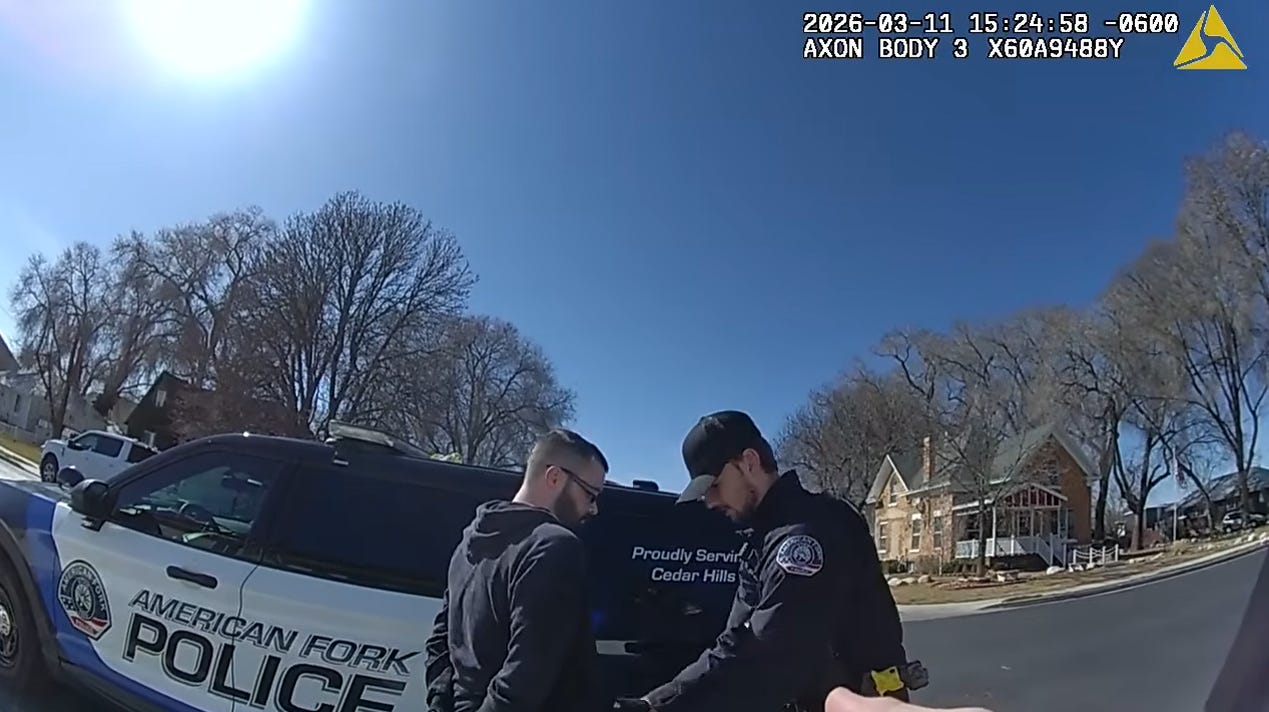
Sheldon Norcross was among the group detained during the Airbnb raid with Reckless Ben, but he was not arrested for stalking.
Instead, he was arrested for evidence tampering. Officers told Sheldon they were obtaining a warrant to search his phone for messages related to Reckless Ben and intended to keep the phone while waiting for the warrant. Before handing it over, Sheldon pressed the power button to lock the phone, and officers arrested him for allegedly attempting to destroy evidence.
What is concerning is that pressing the power button does not delete data—it only locks the phone. During a later interrogation, an officer acknowledged that merely pressing the power button would not delete information. If so, it raises questions about whether there was probable cause to believe Sheldon had attempted to destroy evidence.
Sources:
Officer Richardson bodycam Airbnb Raid
Relevant portion begins around 12:00
Officer Adamson bodycam Airbnb Raid (alternate angle)
Relevant portion begins around 12:31
Detective Nicosia bodycam/interrogation — Sheldon Norcross questioning
Relevant portion begins around 00:29
Cody Greenland
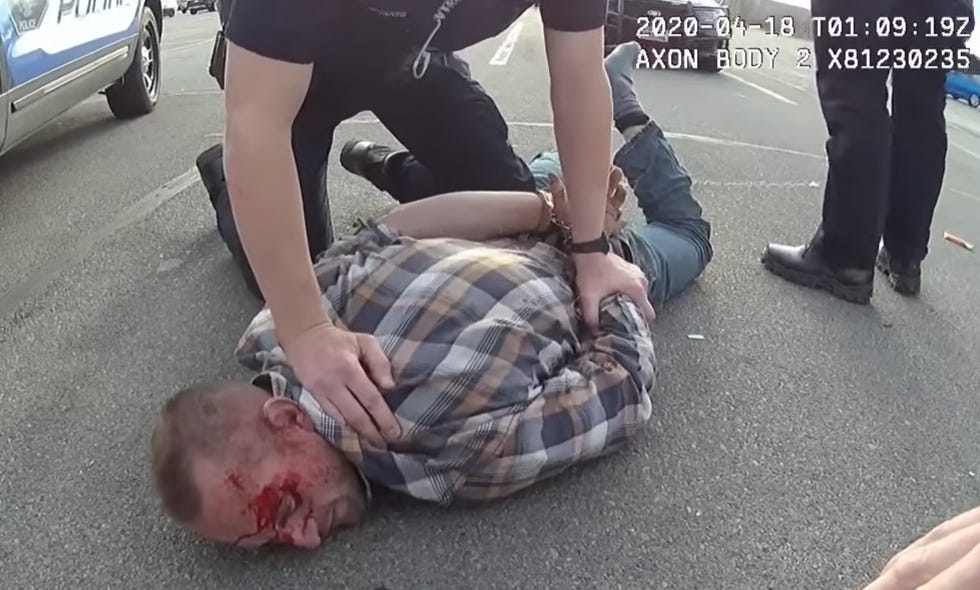
Police responded to a report that a man was attempting to break into vehicles in a Target parking lot. Officers detained Cody Greenland because they believed he might be the suspect. The initial detention appears understandable because Cody had been entering his own vehicle and his girlfriend’s vehicle.
According to the body-camera footage, Cody complied with officers’ commands by getting on his knees and raising his hands. As another officer arrived, Cody was tackled from behind, leaving him with a bloodied face. Officers then searched his pockets and discovered illegal drugs.
The evidence was later suppressed, and the criminal charges were dismissed. Greenland later filed a lawsuit against the officers and the City of American Fork, and the case was settled for an undisclosed amount.
Based on the circumstances shown on the body-camera footage, the case raises significant Fourth Amendment concerns regarding the use of force, the search, and whether officers had sufficient legal justification before arresting and searching Cody.
Sources:
Joseph Ferreri
Joseph Ferreri was arrested for aiding prostitution after he drove his wife, Wang Juying, to and from the massage parlor where she worked. The case was connected to an investigation involving American Fork officer Shawn Lott.
Ferreri’s wife and several others were arrested for allegedly soliciting money for sexual acts, but the charges against all of the women, including Ferreri’s wife, were later dropped.
What is concerning is that the apparent evidence against Ferreri was that his wife was a suspect, he drove her to and from work, and he allegedly told officers that he suspected she “might be doing something sexual.” Even if Ferreri suspected illegal activity, suspicion alone does not establish that he knowingly participated in or facilitated prostitution.
The concern is that Ferreri appears to have been charged based largely on his proximity to his wife’s alleged conduct, even though the underlying charges against the women were later dropped.
Sources:
Eric Roundy
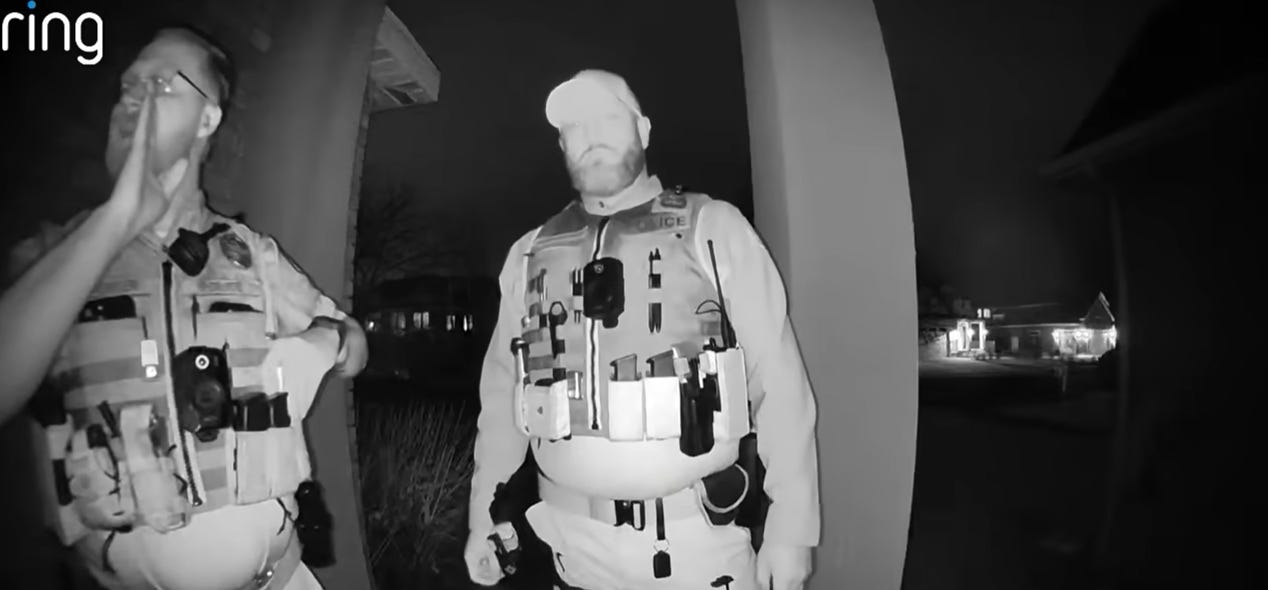
A woman called police alleging harassment by Eric Roundy and his wife.
Regardless of what the allegations were, what concerns me is how American Fork officers Bronson Kitchen and Jensen handled the encounter with the couple.
The officers knocked on the door, but the couple stated through their Ring camera that they declined to open the door or answer questions. Instead of leaving, Kitchen and Jensen continued knocking and ringing the doorbell, telling the couple they needed to come out and talk.
After approximately 15 minutes, the officers left, but only after the couple asked dispatch for someone from the Utah County Sheriff’s Office to get the officers to leave.
The problem is that the officers did not seem to respect the couple’s right to refuse questions, even after being repeatedly told to leave the property. The officers had no warrant and no apparent exception to the warrant requirement. Even if this did not violate clearly established law, it still shows a concerning disregard for Fourth Amendment rights and the limits of police authority at someone’s home.
I later spoke with Adam Ellison, who I understood to be a supervisor connected to the case. He stated that, as far as he was aware, the officers did not violate any department policy.
Sources:
Janene Thorpe
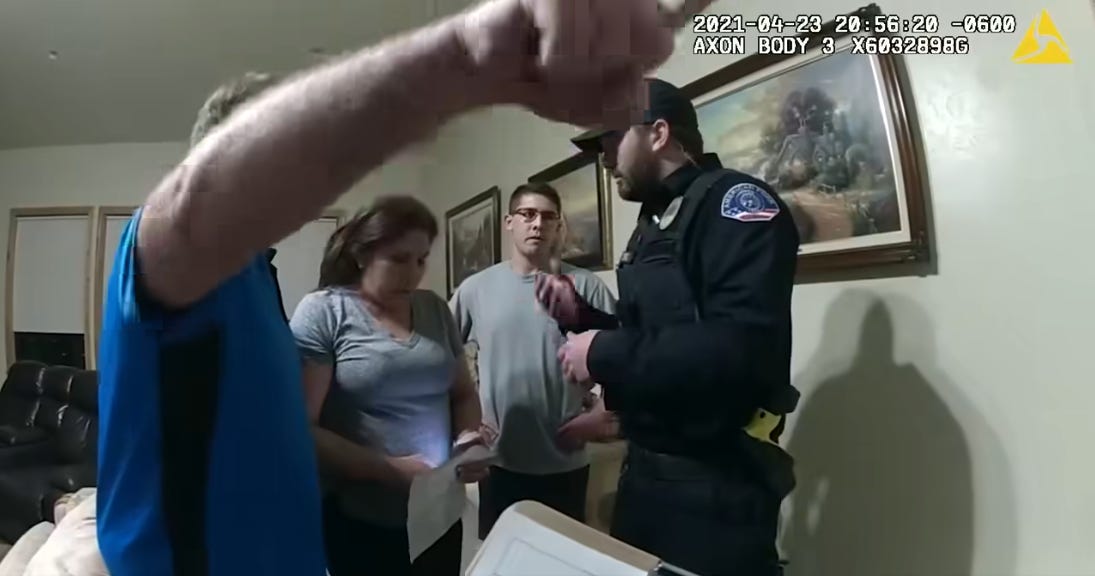
Janene Thorpe’s neighbor filed complaints with the American Fork Police Department alleging that Janene had thrown items, including rocks, into the neighbor’s yard.
Officers went to the home to issue a citation, and Janene’s husband voluntarily answered the door. Because the officers had no warrant, the encounter was consensual, and the husband was free to end the conversation. When he attempted to close the door, an officer placed his foot in the doorway and entered the home to finish issuing the citation.
Under the Fourth Amendment, the home receives the highest level of constitutional protection, and issuing a citation is generally not a recognized exception to the warrant requirement. Because the body-camera footage shows no apparent warrant or exigent circumstances, the officer’s entry raises a significant constitutional concern.
The couple filed a lawsuit against the officer, the American Fork Police Department, and the city, and the litigation is ongoing.
Sources:
Aaron Booker
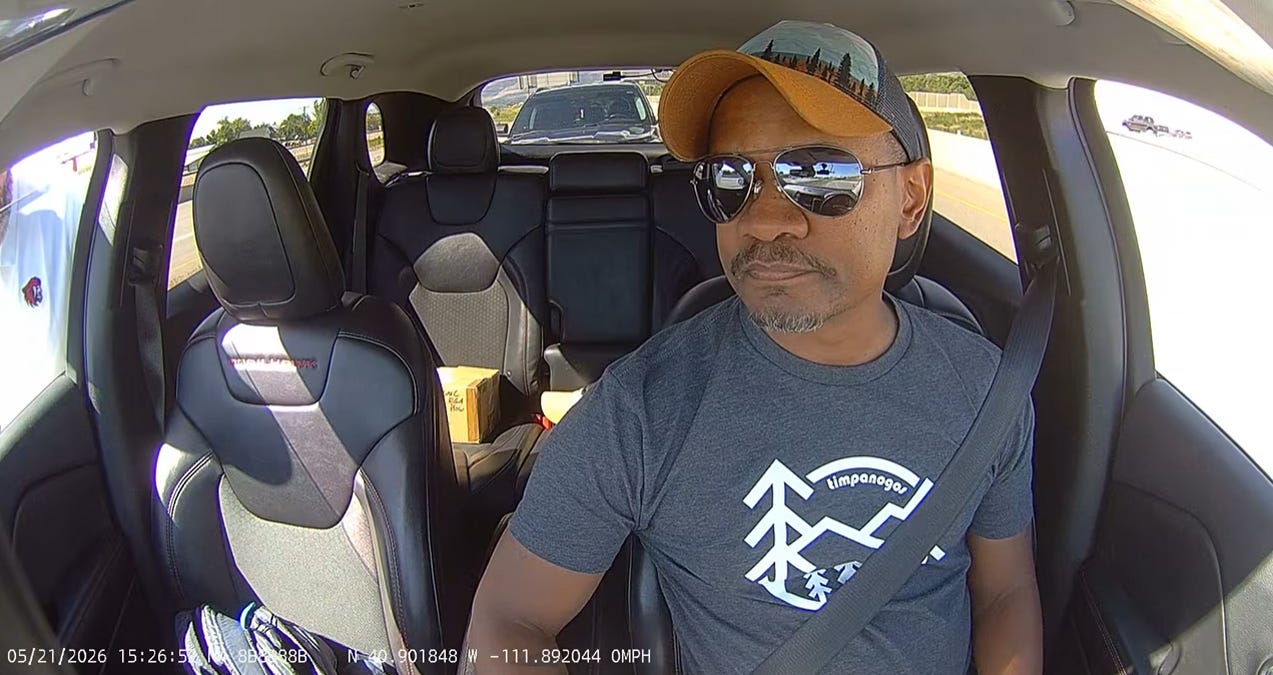
Aaron Booker was pulled over by American Fork Detective Bronson Kitchen while driving on I-15 near Centerville, Utah. Kitchen claimed Booker had illegally used an HOV lane, but dashcam footage later reviewed by LackLuster appeared to support Booker’s position that the HOV lane had already ended. According to the American Fork Citizen, Kitchen later admitted during a recorded apology call that he had been wrong about the lane and apologized for the stop.
The stop became more concerning because Booker only lowered his window partway, and Kitchen escalated the encounter by threatening to have another agency break the window. Kitchen later apologized for that too, saying he should not have made that threat or allowed himself to get “amped up.”
This case is important because it shows an officer making a questionable stop outside American Fork, escalating when a citizen asserted his rights, and then later acknowledging that both the stop and the escalation were wrong. After the incident went viral, American Fork Police Chief Cameron Paul called Aaron Booker and told him that Officer Kitchen would be required to apologize. Booker later received that apology, but the fact that it came only after public scrutiny and intervention from the chief makes the case even more concerning.
The bigger question is how many citizens are subjected to unlawful or improper stops but never have dashcam footage, public attention, or a platform large enough to force accountability.
Sources:
Michael Anthony Roy
Michael Anthony Roy sued American Fork City, Utah County, Spanish Fork City, and several officers after a Utah County Major Crimes Task Force operation allegedly targeted the wrong man. According to the lawsuit, officers were looking for a different person, Michael Schwabland, who was considered violent and had allegedly threatened to shoot officers. But when Detective Shawn Lott approached the vehicle, he allegedly realized immediately that the driver was Roy, not Schwabland, because he had dealt with Roy the day before. Despite that, the lawsuit claims Lott did not tell the other officers they had the wrong person.
Roy alleges he was pulled from the car, struck in the head with a rifle, punched, kicked, handcuffed, and tased, suffering injuries that required staples. The lawsuit also claims a task force official later offered him $2,000 and medical-bill payment after learning he had been mistaken for someone else. According to KSL’s reporting on the lawsuit, a use-of-force review found one officer was not in compliance with department policy and that other officers should have spoken up once they realized Roy was the wrong person.
This case brings up serious due process violations. If what Roy said was true, then they violently arrested the wrong person and failed to stop even after the mistake should have been clear.
Michael Anthony Roy filed a federal civil-rights lawsuit in 2022 against American Fork City, Utah County, Spanish Fork City, and several officers.
What makes this case especially concerning is that Shawn Lott was not only involved in the Michael Anthony Roy case, but was also the arresting officer in the Joseph Ferreri case. Standing alone, any one of these cases may be disputed or explained differently by the officers involved. But when the same officer appears in multiple controversial cases involving questionable arrests, disputed investigative decisions, or weak evidence, it raises a serious concern about whether there is a broader pattern of poor investigative practices and a disregard for due process.
Sources:
American Fork Police: The Road to Accountability
Our justice system is not truly just without transparency. We cannot rely on our public institutions and police departments to regulate themselves. The public needs to know the details of police encounters, especially when there are allegations of civil rights violations.
Oftentimes, our system has failed to hold those in power accountable. But when citizens step in, investigate, and bring the truth to light, it helps us expose constitutional violations.
After watching the videos and reading the stories of these cases, I feel that there are systemic issues in the department.
For me, this is personal because I grew up in Cedar Hills, which is one of the cities that the American Fork Police operate in, and I live near American Fork and I still go there often.
GRAMA - Government Records Access and Management Act
One of the most powerful ways individuals can expose wrongdoing is by obtaining information through public records requests. Many people online have already started doing this by requesting records, reviewing body-camera footage, and sharing what they find. I plan to do the same as part of a broader effort to audit the American Fork Police Department.
I have already submitted three GRAMA requests to the American Fork Police Department. So far, I have requested:
The current AFPD policy manual
A roster of all AFPD law enforcement officers from 2020–2026
An inventory of all training materials currently used by AFPD
I plan to use this information to better understand how AFPD officers are trained, what policies they are expected to follow, and who has worked for the department over the past six years. That information will also help guide future records requests.
I am also planning to create a public page tracking my records requests. On that page, I will share the records I receive, the status of each request, and any relevant information I find.
Anyone who wants to help with this effort can email me at politicalnonpartisan@gmail.com. I am willing to share records collected by others, either with attribution or anonymously.
Accountability requires public involvement. Our legal and political systems often fail when ordinary people stay silent or assume someone else will do the work. If we want law enforcement agencies to respect constitutional rights, transparency, and the limits of their authority, then more of us need to step up, ask questions, request records, and make the information public.
I would pay-per-view to watch the depositions of these cops in the federal lawsuit. This is the biggest thing since Afroman.