


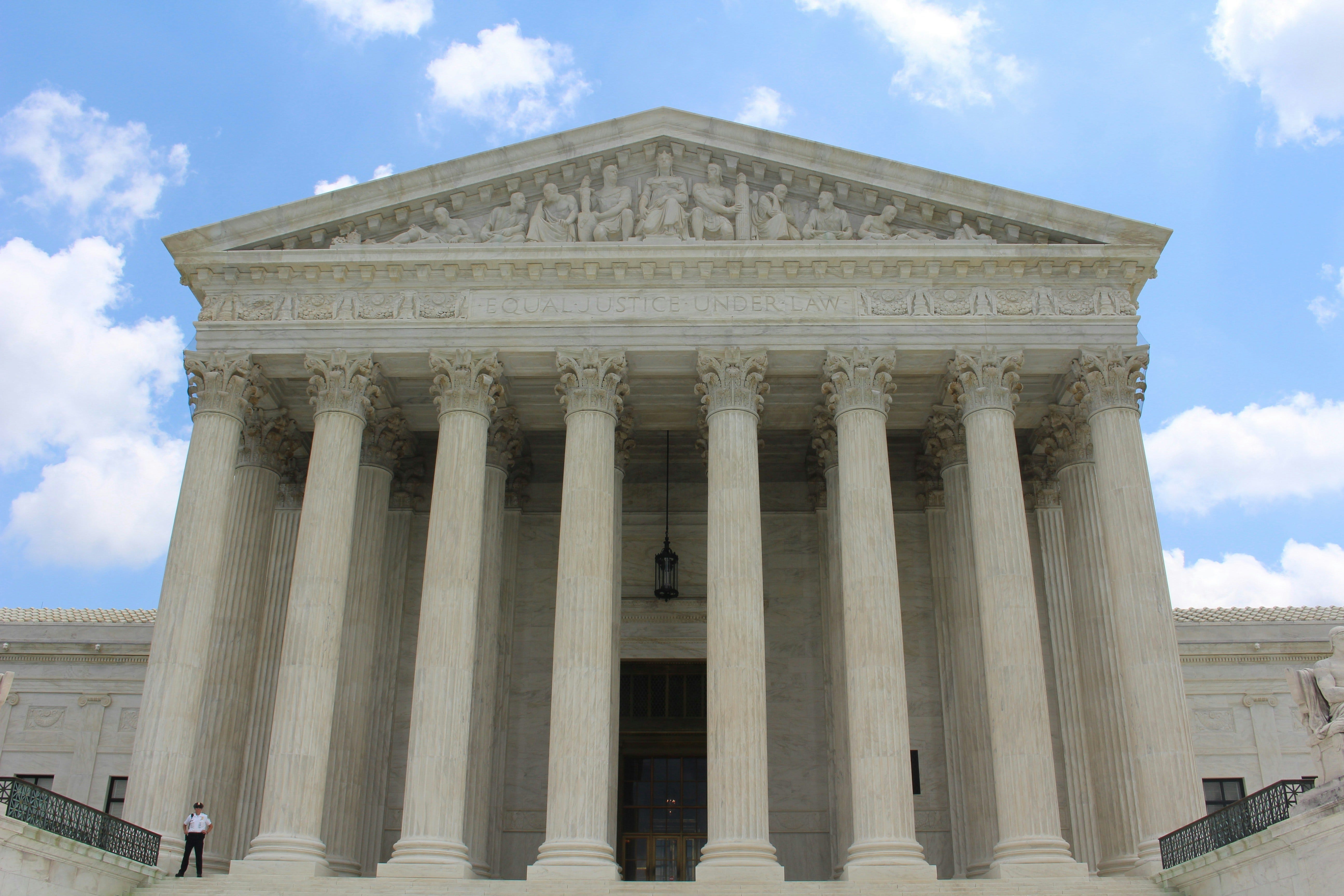
The people must remain ever vigilant against tyrants masquerading as public servants.
America is more than just a country. It is an ideal of freedom, equal rights, and due process for everyone. Even though the United States often falls short of that ideal, I am always proud to be an American because I believe in the vision of this country’s founders.
Our constitutional rights, which protect us from government overreach and intrusion, are among the most precious things we have as Americans. Many people have fought and died to protect those rights.
However, those precious rights are under attack. Across the country, people have their rights violated by police officers. Even though many officers do good work protecting their communities, police abuse of power is not an isolated occurrence.
In this article, I am not going to discuss specific cases in detail. Instead, I will teach you about your rights when you encounter police officers so you can recognize when those rights may be violated. I will also share YouTube channels that review police encounters and discuss the relevant case law and statutes involved in those cases.
The Rights People Have During Police Encounters
Most people in the United States are aware of the First, Fourth, and Fifth Amendments.
First Amendment - freedom of religion, press, assembly, and protest
Fourth Amendment - protection from unlawful searches and seizures
Fifth Amendment - the right to remain silent
These are fundamental American rights, but many people do not fully understand their rights when encountering police.
In recent years, the U.S. Supreme Court and other federal courts have issued rulings clarifying our rights under the First, Fourth, and Fifth Amendments and placing important limits on police power.
The First Amendment
Under the First Amendment, people are given freedom of expression. In the United States, barring exceptions such as threats of illegal action or defamation, people have the right to free speech, even if that speech is offensive.
The Supreme Court has ruled that swearing, using vulgar language, and even showing officers the middle finger are constitutionally protected forms of speech. Officers cannot detain a person simply for using language that is considered offensive or vulgar.
The Supreme Court has also determined that recording in public, including recording a police officer, is a First Amendment right. This is because recording is instrumental in reporting on and speaking out against government overreach. People are generally allowed to record in public, including recording police officers and other people who are visible from public places.
Officers are not allowed to prevent you from recording or attempt to delete recordings from your phone.
Recording an officer during a traffic stop is constitutionally protected.
The Fourth Amendment
There are three main types of encounters with police:
Consensual Encounter
Investigative Stop (Terry Stop)
Arrest
The type of encounter is important because it determines what your rights are and what legal standard police must meet in order to perform certain actions.
Consensual Encounter
In a consensual encounter, officers are allowed to approach you, but you can consent to the interaction or decline to talk with them.
In this type of interaction:
You cannot be detained or forced to stay where you are.
Officers may still follow you or try to talk with you.
You do not have to answer questions.
There is no legal requirement police must meet in order to approach and speak with you.
Investigative Stop
Then there is a Terry Stop.
In Terry v. Ohio, the Supreme Court stated that officers can lawfully detain you and require you to stay where you are as part of an investigation as long as they have reasonable suspicion supported by articulable facts.
Reasonable suspicion means that officers have facts indicating that you might be committing, have committed, or are about to commit a crime. The Supreme Court and other federal courts have issued rulings about what constitutes reasonable suspicion.
Articulable facts are specific facts that an officer can point to in order to explain why they believe criminal activity may be occurring. Courts generally require more than a mere hunch. Factors such as being out late at night, being in a high-crime area, or simply being near the location of a reported crime are often not enough by themselves to justify a detention.
The exact laws and details vary by state, but in many states, when you are detained under reasonable suspicion or during a valid traffic stop, you are required to present identification or provide your name and birthdate so officers can identify you.
Under a lawful Terry stop, if you refuse to identify yourself, you may be arrested for failure to identify or obstruction.
What lawful orders a police officer can give during a traffic stop varies slightly depending on the state, but in most states, officers can require you to provide:
Your driver’s license
Your registration
Proof of insurance
Police Encounters at the Home
Your home receives special constitutional protections.
When police knock on your door in order to investigate or ask questions, it is often called a “knock and talk.”
During such encounters, you are generally not required to open the door or answer questions.
In general, police need:
A search warrant to search a home.
An arrest warrant to enter a home to arrest a person.
Note: If officers believe a suspect is inside someone else's home, they generally also need a search warrant for that residence unless an exception to the warrant requirement applies.
However, there are narrow exceptions known as exigent circumstances.
1. Emergency Aid or an Immediate Threat to Life or Safety
Officers may enter a home without a warrant when they reasonably believe someone inside needs immediate assistance or is in danger of serious harm.
2. Hot Pursuit of a Fleeing Suspect
Officers who are actively pursuing a fleeing suspect may, in certain circumstances, continue that pursuit into a residence without first obtaining a warrant.
3. Imminent Destruction of Evidence
Officers may enter a home without a warrant when they reasonably believe evidence will be destroyed before a warrant can be obtained.
The Fifth Amendment
The Fifth Amendment allows you to remain silent so that you do not incriminate yourself. One common misconception is that you have to answer questions from police officers. In many cases, you actually do not have to tell them much of anything. Except for information required by state or federal law to identify yourself during a lawful traffic stop or detention, you can decline to answer other questions. This includes when officers knock on the door of your home.
Many people voluntarily answer police questions, which leads others to assume they are required to do so. However, even during lawful detentions where state law requires you to provide identification or your name and birthdate, you are generally not required to answer other investigative questions.
If police come to your home, knock on your door, and say, “We need you to come out and answer some questions,” you are generally not required to answer questions, and those interactions are often voluntary.
Some police officers may say you are “being difficult” for not answering questions, but your constitutional rights do not exist to make their investigation easier. They exist to protect you from government and police overreach.
How My Views Changed
I used to believe that police misconduct was a rare occurrence. I was the person who would answer every question from an officer during a traffic stop, and I would not assert my right to refuse to answer questions.
However, in recent years, I have become disillusioned with our political system and started questioning some of my previous beliefs. I have also learned more about policing and our rights during police encounters.
I now realize that although there are many police officers who protect the community, there are also officers who abuse their authority and get upset when people try to assert their constitutional rights.
There are several constitutional and civil-rights-oriented channels that I have been watching recently that focus on constitutional violations and police accountability.
I am not going to discuss specific cases in detail in this article. However, the channels listed below have analyzed numerous incidents involving police misconduct, many of which resulted in successful civil-rights lawsuits, settlements, disciplinary actions, or court findings that constitutional rights were violated. I encourage readers to review those cases and reach their own conclusions.
This article is intended to provide a general overview of constitutional rights during police encounters. In future posts, I hope to discuss specific cases and examples that illustrate many of the constitutional issues discussed in this article.
Recommended YouTube Channels
The Civil Rights Lawyer
Audit the Audit
LackLuster
We The People University
Hampton Law
As I have watched body-cam videos of law enforcement interactions, I have come to realize that constitutional violations and abuses of police authority are far more common than many Americans realize.
There are hundreds of documented cases in recent years involving violations of people’s First, Fourth, and Fifth Amendment rights. Many of these individuals spend months or even years navigating the legal system before the charges against them are finally dropped.
The system that is supposed to protect our rights often places a heavy financial burden on people who are forced to defend those rights.
Why Accountability Matters
Constitutional protections exist to protect everyone from government overreach.
Police are the arm of government responsible for enforcing laws. They have the power to stop, detain, search, arrest, and recommend criminal charges.
Even though many officers act lawfully, officers are given significant discretion in their interactions with civilians. Police culture, training, incentives, and policies can cause officers to push the boundaries of what is constitutional.
When rights are violated, the burden of challenging those violations often falls on the individual citizen. Even when charges are later dismissed or a court ultimately rules in the citizen’s favor, the process can involve legal expenses, lost time, stress, reputational harm, and months or years of uncertainty.
We need individuals who are willing to submit public records requests to obtain body-camera footage and other documentation of police encounters. Without public pressure and visibility, the institution of policing will not change. Without accountability, people whose rights are violated and who are wrongfully charged may never receive justice.
Our constitutional rights are among the most precious things we have as Americans. In the Parable of the Pearl of Great Price, a merchant sold everything he had in order to obtain a pearl of immense value. As Americans, our constitutional rights are that pearl.
The government and its agents often fail to regulate themselves, so it is our responsibility to push for accountability. We cannot stand idly by as our constitutional rights are violated or eroded over time.
We must assert our rights and remain actively engaged in police reform within our communities.
Great read, it's terrifying what police have been able to and continue to get away with in terms of unconstitutional abuse of citizens. I listened to this podcast called On Our Watch about how the internal investigation system allows cops to protect their buddies and facilitate further abuse. It's definitely worth a listen
https://open.spotify.com/show/0OLWoyizopu6tY1XiuX70x?si=-0epm6OoS9igyLvPMTVrKw